
Relocating can feel exciting to adults, but children often find it confusing or stressful. They may feel sad about leaving their home, friends, or school. Disrupted routines can also cause sleep or behavior issues. This is why families need to prepare early. Planning ahead helps children adjust and feel more secure during the process. For example, some parents create visual calendars to show what will happen each day. Others pack a favorite toy or blanket last to keep it nearby. Companies like Beltway Movers often recommend simple ways to involve kids in the process. This post will explore how moving with kids affects different age groups, how to plan before moving day, what to do during the move, and how to settle in afterward.
How moving impacts children of different age groups
Different age groups respond to moving in different ways. For that reason, families often seek advice from professionals, such as local movers in Rockville MD, to better manage the process. Each stage brings unique concerns and reactions, so it’s helpful to understand what to expect:
- Toddlers may feel anxious or clingy. They can struggle with sleep changes and new surroundings.
- School-aged children might worry about making new friends or missing their current school.
- Teens often feel stressed about losing social connections and may become withdrawn or irritable.
Signs like mood swings, sleep problems, or changes in behavior are common. Keep communication simple and honest. Let them ask questions and express feelings. Stick to routines as much as possible to help them feel safe and grounded.
How to prepare your kids before the move
Preparing children for a move takes time and patience. Many families speak with Northern Virginia movers who often advise starting early with open and honest conversations. Keep the tone positive but realistic. For example, explain when the move will happen and what changes to expect. Answer questions clearly, and avoid overwhelming details. If possible, take your kids to visit the new home or neighborhood. Let them see nearby parks, schools, or stores. This helps reduce fear of the unknown. If an in-person visit isn’t possible, show photos or use online maps.

Packing can also become part of the preparation. Let kids pack a small box with their favorite toys or books. This gives them a sense of control. You can also label it as “open first” to keep those comfort items close. There are also great children’s books and videos about moving. Titles like Big Ernie’s New Home or The Berenstain Bears’ Moving Day explain change in simple ways. These tools make the process easier to understand and less stressful.
Packing and organizing tips when moving with kids
Trying to pack an entire house while keeping kids calm can feel overwhelming. That’s why it helps to stay organized and involve your children in simple ways. One useful tip is to label every box clearly. Use large, easy-to-read labels on all sides. Mark important ones as “open first,” especially boxes with daily essentials like toiletries, snacks, or bedding. A helpful idea is to create a kids’ move essential box. Include a few favorite toys, books, a blanket, and snacks. This box should stay with you, not the movers. It gives your child comfort and keeps them occupied during the move.
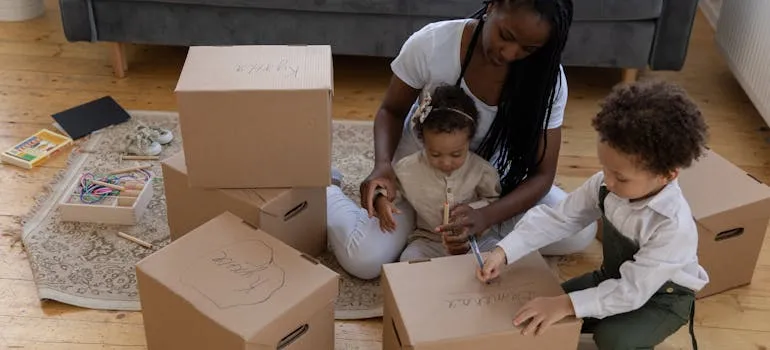
Let kids pack a small box of their own. This gives them a sense of control. Choose soft or lightweight items that they can handle. Packing together also creates a shared task that feels less stressful. Keep everyday items in a separate bag for easy access. Pack clothes, chargers, water bottles, and any medications you might need on the road. Staying organized helps make moving day smoother for everyone, especially when kids are involved.
How to manage moving day with kids around
Keeping kids safe and calm takes extra effort on moving day. Many families search for moving day tips to avoid last-minute stress. One helpful step is arranging child care ahead of time. If a trusted friend or relative can watch your child for a few hours, that can give you space to focus on logistics. If child care isn’t possible, keep kids busy with small tasks. For example, let them carry light items like pillows or stuffed animals. This helps them feel involved without getting in the way.
It’s also smart to prepare a small bag with snacks, water, and comfort items. Include a few toys, crayons, or books to hold their attention. A tablet with downloaded videos can help during long wait times. Finally, plan your schedule clearly. Let everyone know what will happen and when. You could tape a simple list near the door. Knowing what to expect helps both adults and kids stay calm. With the right approach, your child can handle moving day better and stay safe during all the activity.
Settling into the new home after the move
After the move, focus on helping your child feel comfortable in the new home. Start by unpacking their room first. Place familiar items like blankets, stuffed animals, and favorite books where they can see and use them. This helps create a sense of stability right away. Next, explore your new neighborhood together. Visit nearby parks, playgrounds, and local stores. This introduces a new routine and helps your child feel more connected to the area. Try to keep daily habits the same, such as bedtime and mealtimes. Familiar routines make new spaces feel less overwhelming. Also, look for activities like library story time, sports teams, or art classes. These are great ways for your child to meet others and settle in faster.

Making moving with kids a smoother experience
Relocating with children takes extra planning, patience, and clear communication. However, small steps can make a big difference. Unpacking their room first, keeping routines steady, and involving them early all help ease the process. Staying organized, preparing comfort items, and offering simple tasks can reduce stress on moving day. It also helps to explore your new neighborhood together and join local activities soon after arriving. These efforts support emotional adjustment and build a sense of safety. With the right approach, families can turn a difficult day into a positive experience. While every move is different, the basic needs of children stay the same: stability, comfort, and reassurance. That’s what makes moving with kids easier for everyone involved.

